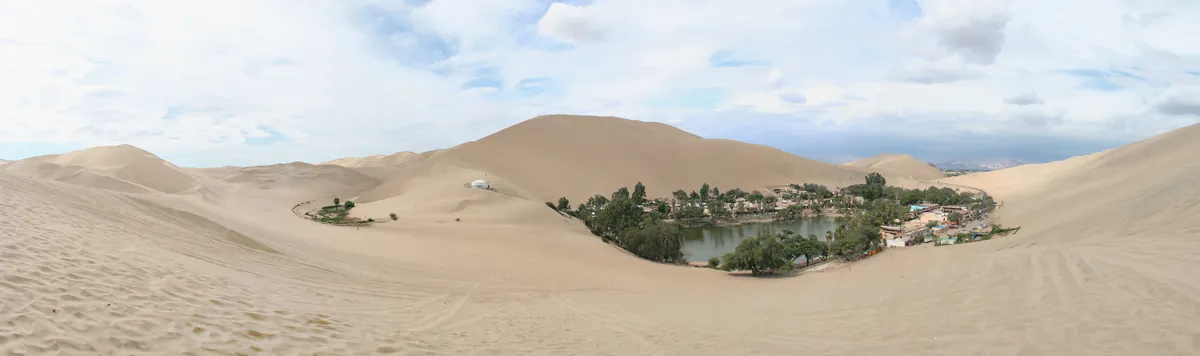
South of Lima, three landscapes fold into a single day: a morning boat out to the sea-lion-and-penguin colonies of the Ballestas Islands, the desert-meets-ocean of the Paracas reserve, and an afternoon of dune buggies and sandboarding at the Huacachina oasis, ending with sunset from the top of the dunes. Here's how the day fits together.
The trip's appeal is the range of it — sea, desert-coast and dune, each a different world, all within a single day. Here are the three.
01
The Ballestas Islands
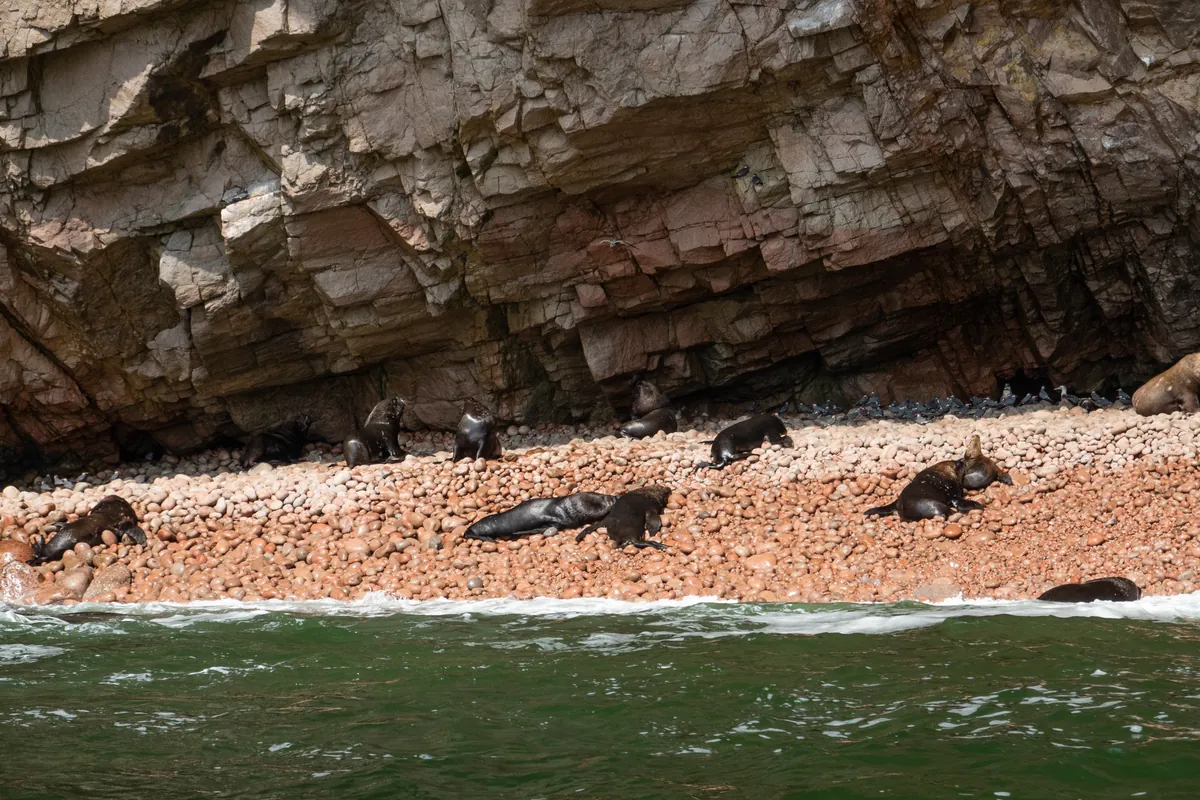
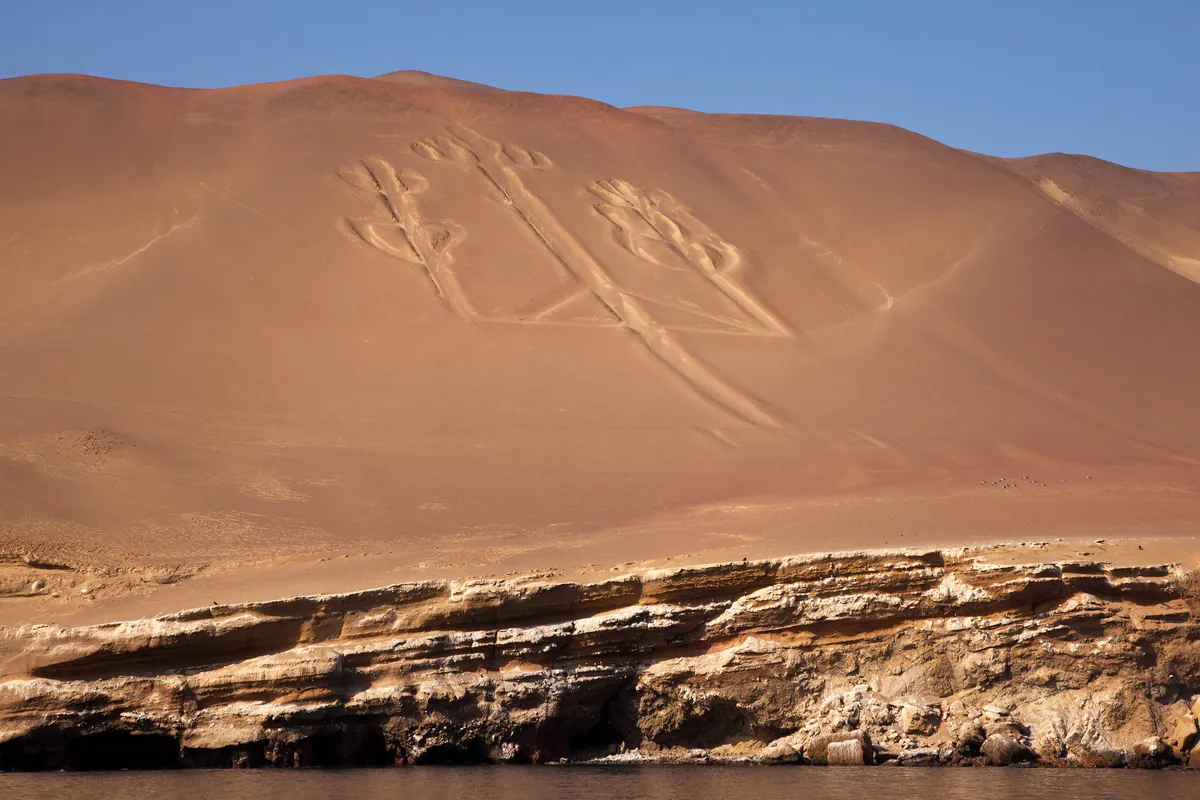
A morning boat from Paracas out to the islands — about two hours on the water. On the way out the boat pauses beside the Candelabra, a huge geoglyph carved into a seaside slope; then the islets themselves, crowded with sea lions hauled out on the rocks, Humboldt penguins, and clouds of guano birds. You view it all from the boat; landing is not permitted. The 'poor man's Galápagos,' and a genuine wildlife morning.
02
The Paracas Reserve
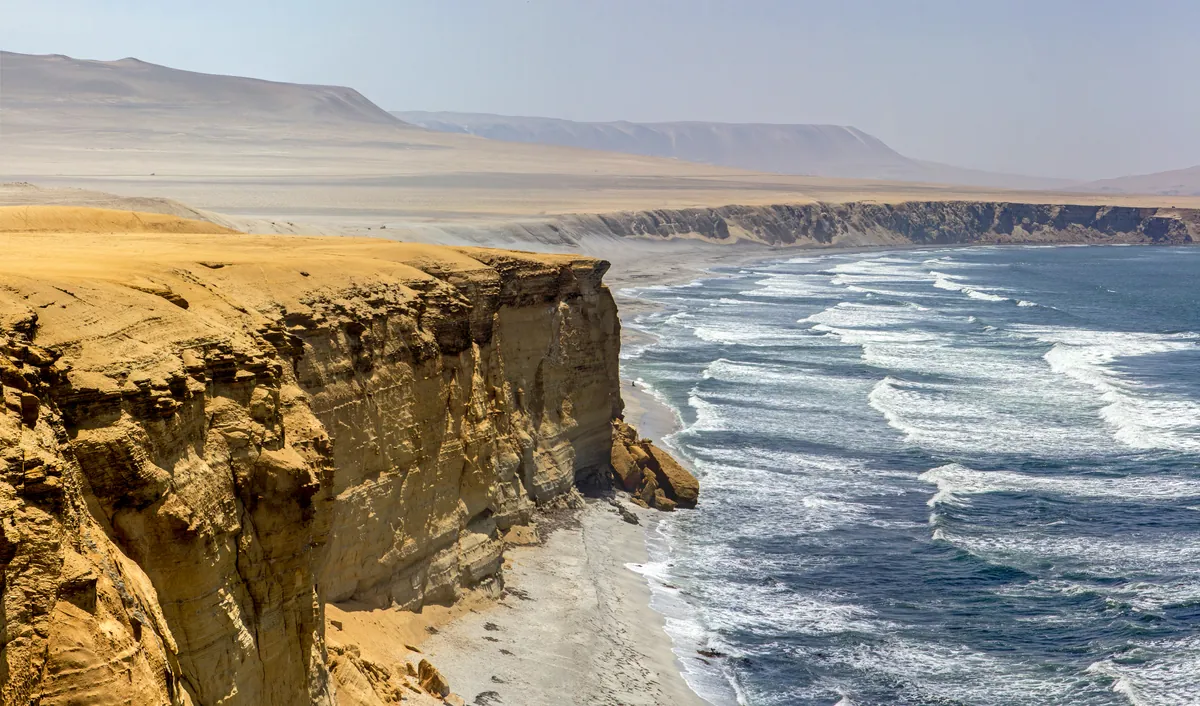
Where the desert meets the Pacific: a reserve of cliffs, dunes and hidden lagoons on the Paracas peninsula. Its highlights are Playa Roja, a red-sand beach coloured by the pink granodiorite in the cliffs, and the coastal viewpoint of La Catedral — whose famous natural arch collapsed in the 2007 earthquake, but whose setting remains striking. Included on some itineraries and skipped or brushed past on others, so check before you book.
03
The Huacachina Oasis
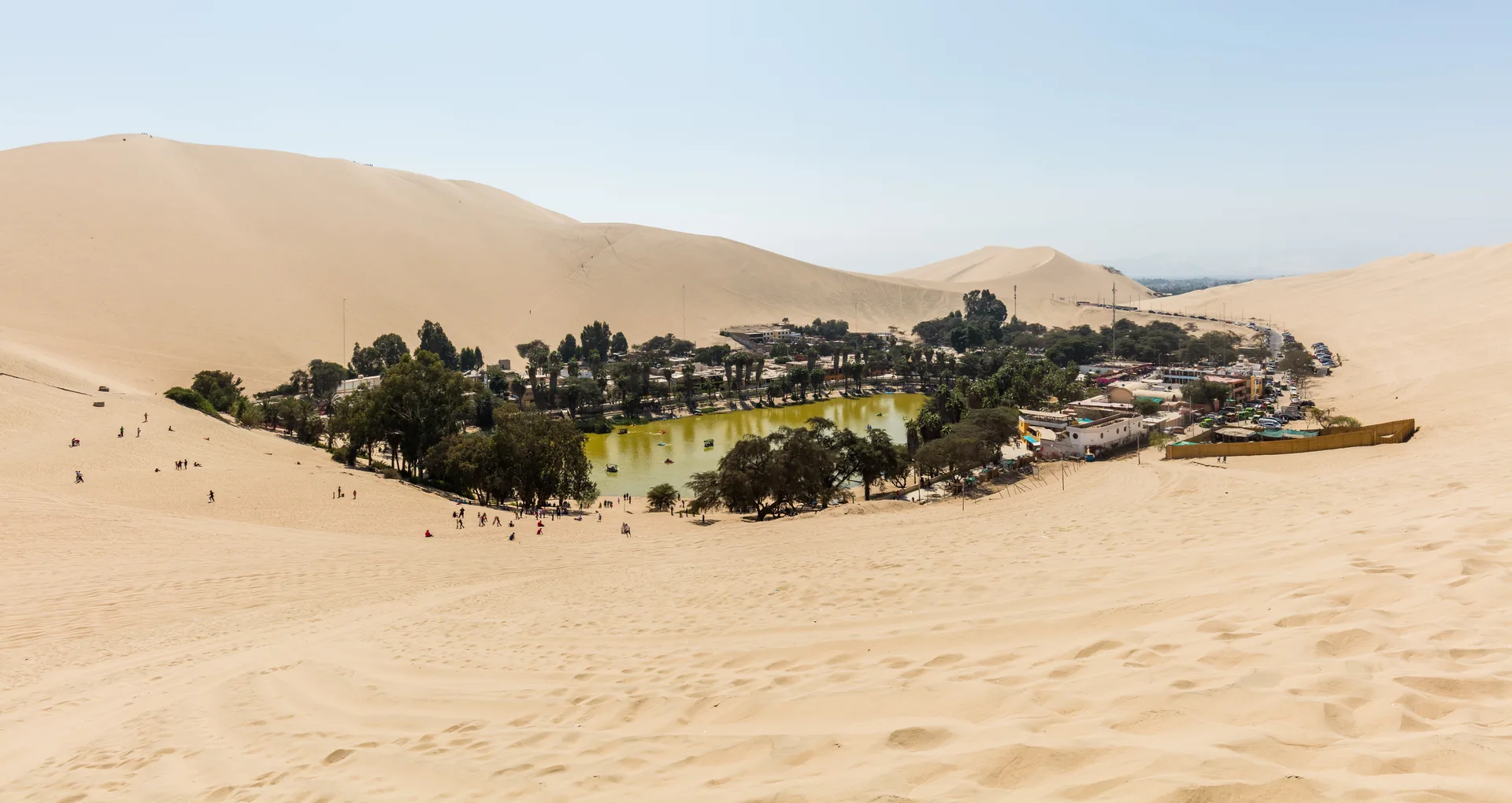
South to Ica, and a complete change of scene: Huacachina, a palm-ringed lagoon marooned in the desert — said to be South America's only natural oasis — with enormous dunes stacked behind it. The afternoon is the trip's adrenaline: a dune buggy roaring up and plunging down the sand, sandboarding on the slopes, and a front-row sunset from the top of the dunes. For many, the emotional peak of the day.
What it isA coast-and-desert day south of Lima: the Ballestas Islands wildlife boat, the Paracas reserve, and dune buggies plus sandboarding at the Huacachina oasis
The wildlifeSea lions, endangered Humboldt penguins and huge seabird colonies at the Ballestas Islands — viewed from the boat, which never lands (they're protected)
The finaleDune buggies and sandboarding on the big dunes above Huacachina, South America's only natural desert oasis, timed for a desert sunset
The dayFrom Lima it's long — around 16–18 hours door to door, with 9+ hours on the road; many do it en route south instead of a Lima round trip
Islands, desert, and a dune at sunset
Islands, desert, and a dune at sunset
Three places, one day
The Paracas day trip is really a combination of three distinct things strung along the coast and desert south of Lima. In the morning, a boat runs out from the little port of Paracas to the Ballestas Islands, a cluster of rocky islets thick with sea lions, penguins and seabirds. Then the day turns inland and south to Ica, where the Huacachina oasis sits ringed by some of the biggest dunes in South America — the stage for an afternoon of dune buggies and sandboarding, finished with a desert sunset. Between them, on some itineraries, the desert-and-ocean scenery of the Paracas National Reserve.
The 'poor man's Galápagos'
The Ballestas are often called the 'poor man's Galápagos,' and it's worth being clear about what that means. You get a genuine slice of the wildlife — barking sea-lion colonies, endangered Humboldt penguins, vast noisy seabird rookeries — at a tiny fraction of the cost of the real Galápagos. What you don't get is a landing: the islands have been protected since 2009 and no one steps ashore, so this is a two-hour boat cruise viewing the wildlife from the water, not an island walk. Come for that, and it delivers.
A long day, or a leg of the journey
As a day trip from Lima it's a big undertaking — commonly sixteen to eighteen hours door to door, with nine or more of them on the coach down and back up the Panamericana. It's popular and well organised, but it is a long, hot, sandy day. Plenty of travellers instead fold Paracas and Huacachina into a journey south, staying a night or two along the way, which turns the same three landscapes into a far more relaxed trip.
Camila Reyes — I write about the coast and desert south of Lima — what the Ballestas boat tour really delivers, how the Paracas–Huacachina day fits together, and whether to do it from Lima or stay the night. This is an independent booking guide, not a tour operator or the national reserve.
16–18ha full day trip from Lima door to door, with 9+ hours on the road — which is why many go en route south instead
before you book
The long day, and what to expect
Two things shape whether you'll love this trip: how you handle the distance from Lima, and what you expect from the Ballestas boat. Both are worth knowing up front.
It's a very long day from Lima
Paracas is around 260 kilometres south of Lima, three and a half to four hours each way, and Huacachina is another hour or so beyond it. A full-day tour from Lima therefore runs sixteen to eighteen hours door to door, typically leaving around 5 a.m. and returning late, with nine or more hours on the coach. It's doable and popular, but it's not a gentle day — and it's a poor fit before a same-night flight, or with back or neck trouble.
The en-route alternative
Because Paracas and Ica sit on the main road south, many travellers don't do a Lima round trip at all — they base a night or two in Paracas or Ica, or take a two-day tour, which removes the brutal driving and lets the three landscapes breathe. If you're heading south anyway, or you'd rather not spend most of a day in a coach, this is the better way to see it.
Ballestas is boat-viewing only
Set your expectations on the islands: you never land. They've been protected since 2009, so the visit is a two-hour boat cruise viewing the wildlife from the water. You'll very likely see sea lions and seabirds and, in season, penguins, but sightings aren't guaranteed and it isn't the immersive island experience of the Galápagos. Approached as a wildlife boat trip, it's a highlight; approached as a Galápagos substitute, it can disappoint.
Seas, seasickness and cancellations
The boat can be cancelled by weather, and the sea is rougher outside the dry season, which also means more seasickness — so if you're prone to it, take something beforehand, and favour the calmer dry-season months. Wildlife is nature, not a show, so numbers vary by day and season. A booking with free cancellation covers you if the boat can't run; the calmest seas and rarest cancellations fall roughly between May and September.
What you'll see
What you'll see
Across the sea and the desert, a handful of sights carry the day. Here's what each one is.
Sea lions
The barking colonies
Large, noisy South American sea-lion rookeries haul out on the Ballestas rocks, the bulls roaring and the colonies in constant motion. In the December-to-March window there are pups. They're the most reliable and most memorable wildlife of the boat trip.
Penguins
Humboldt penguins
The endangered Humboldt penguin nests on the islands, a headline draw for many visitors and a surprise this far from the poles — they thrive on the cold, rich Humboldt Current. They're most active in the cooler dry-season months, with April and early May often cited as ideal for seeing them.
The Candelabra
The seaside geoglyph
On the way out, the boat slows beside the Candelabra, a geoglyph roughly 180 metres tall carved into the slope of the Paracas peninsula and designed to be read from the sea. Its age and purpose are uncertain — a navigational marker, or something ceremonial — and, unlike the inland Nazca Lines, it faces the ocean.
Playa Roja
The red-sand beach
In the Paracas Reserve, a beach of genuinely red sand, coloured by the eroded pink granodiorite of the surrounding cliffs and set against the blue Pacific and golden desert. You don't swim here; it's a photograph and a strange, beautiful piece of coast — included on reserve itineraries.
La Catedral
The lost arch
The reserve's landmark rock formation, once a cathedral-like natural arch over the sea, largely brought down by the 2007 Pisco earthquake. What remains is a dramatic coastal viewpoint rather than the intact arch older photos show — a poignant stop.
The dunes
Huacachina at sunset
The palm-ringed oasis and the towering dunes behind it — the setting for the dune buggy and sandboarding, and for the day's finale: sunset from the crest of the sand, the desert turning gold and rose as the light drops. The image most people carry home from the trip.
Ballestas or the Galápagos?
Ballestas or the Galápagos?
Ballestas Islands
The Galápagos
Access
Boat viewing only — no landing
Guided island landings
Cost
A boat tour from ~US$17–20
A major, costly expedition
Time
About 2 hours on the water
Days, often a cruise
Wildlife
Sea lions, penguins, seabirds
Far richer, up close, endemic
Best for
A wildlife morning on a budget
A once-in-a-lifetime trip
Day trip from Lima, or stay?
Day trip from Lima, or stay?
Where you set out from decides whether this is a punishing marathon or a relaxed couple of days. Both work; be clear which you're choosing.
Day trip from Lima
Everything in one long day
A packaged full-day tour from Lima collects you before dawn, drives you south, runs the Ballestas boat, transfers you to Huacachina for the dune buggy and sunset, and gets you back to Lima late that night. It's efficient and well organised, and the only realistic way to see all three landscapes in a single day if Lima is your base. The cost is the day itself: sixteen to eighteen hours, most of it on the road.
Stay en route south
The same day, unhurried
Because Paracas and Ica lie on the main road south, staying a night or two — or taking a two-day tour, some of which add a Nazca Lines flyover — turns the same sights into a calm trip with almost no wasted driving. If you're travelling on south from Lima anyway, or you simply don't want to spend a day in a coach, this is the more rewarding way to do Paracas and Huacachina.
when to go
When to go
The coast and desert here are dry year-round, so the season is mostly about the sea and the wildlife.
Dry season (May–Sep)
The dry season, roughly May to September, brings the calmest seas — clearer navigation, fewer cancellations and less seasickness on the Ballestas boat — which makes it the safest window for the wildlife morning. July to September can be foggy and windy on the coast, but tours usually still run. If a smooth boat trip matters to you, aim for these months.
Penguins and pups
The wildlife has its own calendar. Humboldt penguins are most active and visible in the cooler dry-season months, with April and early May often singled out for nesting penguins, calm seas and lighter crowds. Sea-lion pups, by contrast, arrive in the warmer December-to-March window, which is also busier with visitors. Pick your season for the wildlife you most want to see.
The desert is always dry
Huacachina and the dunes are desert, hot and rainless essentially all year, so the buggy-and-sandboard afternoon works in any season — it's the coast and the boat that vary. Days are hot; evenings on the dunes cool quickly after sunset, so bring a layer for the ride back down.
Time of day
The day has a natural rhythm the tours follow: the Ballestas boat in the morning, when the sea is calmest and the light is good, and the dune buggy in the late afternoon, timed so the session ends with sunset from the dunes. That's why full-day tours from Lima start so early — the two anchors of the day are fixed at opposite ends of it.
Paracas & Huacachina, in pictures
Paracas & Huacachina, in pictures
Photograph by PsamatheMPhotograph by UnukornoPhotograph by masT3rODPhotograph by Ingo Mehling
Paracas & Huacachina tours
Find a Paracas day for your dates
Every tour below is bookable through GetYourGuide, with live availability and the final price shown in your own currency before you pay — the boat, the transfers and the dune buggy arranged into one day for you.
Live availability and pricing from GetYourGuide, shown in your own currency.
The first choice shapes everything: do the whole thing as a long day from Lima, or fold it into a journey south with a night in Paracas or Ica. The Lima day trip suits travellers short on time and happy to spend most of a day on the road; staying over suits anyone heading south anyway, or wanting the three landscapes at a gentler pace. Decide this before you book, because it changes which tour you want.
Check what's actually included
These are combo tours, and the inclusions vary — some cover the Ballestas boat and Huacachina buggy but only brush past or skip the Paracas Reserve; some add a pisco or vineyard tasting near Ica. Read each itinerary and confirm what you're getting, especially if the desert-and-ocean reserve (Playa Roja, La Catedral) is something you specifically want. The Ballestas boat and the Huacachina dune buggy are the near-universal core.
Time it for the wildlife and the seas
If a calm boat and low seasickness matter, aim for the dry season, roughly May to September. For penguins, April and early May are ideal; for sea-lion pups, the busier December-to-March months. Whatever the season, the boat runs in the morning and the buggy at sunset, so the shape of the day is fixed — a very early start is unavoidable on a Lima day trip.
Come prepared for sea and sand
You'll go from a boat to a desert in a day, so pack for both: a light waterproof layer and motion-sickness tablets for the Ballestas boat if you're prone to it; sunglasses, sunscreen, a hat and a scarf or buff against the flying sand for the dune buggy; closed shoes; and something warmer for the dunes after sunset. Keep cameras in a sealed bag on the buggy — fine sand gets into everything.
Set your Ballestas expectations
Go to the Ballestas as a wildlife boat trip, not a Galápagos substitute: two hours on the water, viewing from the boat, with a good chance of sea lions, seabirds and — in season — penguins, but no landing and no guarantees. Framed that way it's a genuine highlight and remarkable value. The dune-buggy sunset and the sheer variety of the day are what tie it all together.
Is the Ballestas boat trip really like the Galápagos?
It's a genuine budget alternative, but manage your expectations. You get some of the wildlife — sea lions, endangered Humboldt penguins, huge seabird colonies — for a tiny fraction of the cost of the Galápagos, on a boat tour of about two hours. What you don't get is a landing: the islands have been protected since 2009, so you view everything from the water and never step ashore. As a wildlife boat cruise it's a highlight and remarkable value; as a substitute for the immersive, up-close Galápagos experience, it will disappoint. Go for what it is.
Should I do it as a day trip from Lima, or stay overnight?
Both are common. A full-day tour from Lima is popular and well organised, and the only way to see all three landscapes in one day if Lima is your base — but it's a big day, around 16 to 18 hours door to door with nine or more hours on the road, and a poor fit before a same-night flight or with back trouble. Because Paracas and Ica lie on the main road south, many travellers instead base a night or two there, or take a two-day tour, which removes most of the driving and makes it far more relaxed. If you're heading south anyway, staying over is the better choice.
Can you do Ballestas and Huacachina in the same day?
Yes — it's the standard combination. The Ballestas boat runs in the morning from Paracas, and the Huacachina dune buggy and sandboarding come in the afternoon, with a transfer of about an hour to an hour and a half between them, ending with a desert sunset. The two activities fit together comfortably; the only real strain is the long drive from Lima and back if you do it as a day trip rather than staying nearby. The Paracas Reserve, where included, slots in around the morning.
When is the best time to go, and can the boat be cancelled?
The dry season, roughly May to September, brings the calmest seas — clearer boat trips, fewer cancellations and less seasickness — so it's the safest window for the Ballestas morning; July to September can be foggy and windy but tours usually still run. For penguins, April and early May are ideal; for sea-lion pups, the warmer, busier December-to-March months. The boat can occasionally be cancelled by weather, and wildlife sightings are never guaranteed, so choose a tour with free cancellation, and if you're prone to seasickness, take something beforehand.
Is the dune buggy safe, and what should I bring?
It's a real adrenaline ride — fast climbs and steep drops, a roller-coaster on sand — but reputable operators run well-maintained buggies with seatbelts and safety measures, and reviews are broadly positive on safety, with the usual complaints about punctuality rather than danger. Bring sunglasses, sunscreen, a hat and something to cover your mouth and nose against flying sand, closed shoes, and a warmer layer for after sunset when the desert cools quickly. Keep cameras and phones in a sealed bag — fine sand gets everywhere — and take motion-sickness tablets beforehand for both the boat and the buggy if you're prone to it.